Reviewing Make Waves for Real Embroidery Projects
As a designer who has spent years digitizing files and testing them on everything from delicate silk to heavy denim, I approach every new machine embroidery design with a critical eye. It is not enough for a graphic to look good on a screen; it must hold up under the needle. Recently, I evaluated Make Waves, a motivational SVG and digital file set, to determine its viability for actual stitched products. This review breaks down how this design performs in real-world scenarios, moving beyond the digital preview to the tactile reality of thread and fabric.
First Impressions and Visual Personality
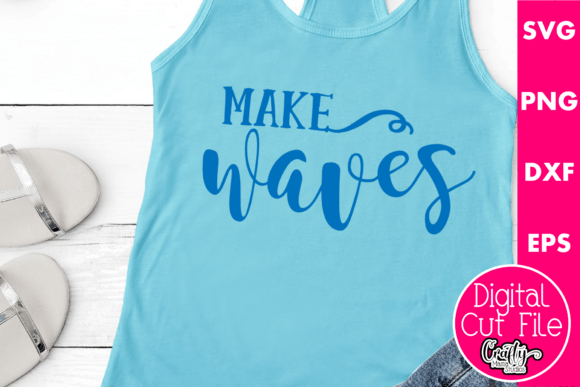
The first thing that strikes you about Make Waves is its clean, confident aesthetic. The phrase carries a dual meaning—both a call to action and a nod to oceanic imagery—which gives it versatility. Visually, the layout is balanced, avoiding the cluttered feel that plagues many inspirational quote SVGs. For an embroidery project, this simplicity is a strength. Complex, overly detailed graphics often turn into a mess of thread breaks and puckering when scaled down. Make Waves offers a silhouette that suggests movement without requiring excessive density.
The mood is uplifting yet professional. It does not scream for attention with chaotic elements but rather invites the viewer to pause. This makes it suitable for a wide range of T-Shirt Designs and home decor items where subtlety is preferred over loud branding. As a piece of Graphics intended for conversion into stitch data, it provides a solid foundation for both satin stitch outlines and fill stitch interiors, depending on how you choose to digitize or interpret the layers.
Real-World Application: The Tote Bag Test
To truly understand the value of an embroidery file, you must imagine it on a specific product. I visualized Make Waves on a natural canvas tote bag. This is a staple item for craft fairs and boutique shops. The design’s horizontal flow works well across the center of a bag, creating a focal point that is easily readable from a distance.
In this scenario, the design would likely benefit from a combination of running stitch for finer details and satin stitch for the bolder lettering. The open spaces in the design allow the texture of the canvas to show through, preventing the "cardboard effect" that happens when stitch density is too high. For an Etsy seller or small shop owner, this balance is crucial. It reduces production time and thread usage while maintaining a high-quality, handmade appearance. Customers appreciate items that feel durable, and a well-executed version of Make Waves on a tote signals longevity.
Apparel and Custom Gifts
Beyond bags, this design shines in custom apparel. Imagine it embroidered on the left chest of a heather grey sweatshirt. The motivational aspect of the quote resonates with fitness enthusiasts, teachers, and creatives. When applied as sweatshirt embroidery, the design needs to be scaled appropriately to avoid distorting the knit fabric. Using a cut-away stabilizer is essential here to support the stitches during wear and washing.
For baby embroidery, such as on a onesie or burp cloth, the design must be simplified. While Make Waves is elegant, tiny lettering can become illegible if stitched too small. I recommend testing the design at various sizes on scrap fabric before committing to a final product. If the text becomes too dense, consider removing some of the finer decorative elements to ensure clarity. This attention to detail builds trust with buyers who are purchasing personalized gifts for newborns.
Navigating Technical Challenges
No design is without its challenges, and Make Waves requires careful consideration in certain contexts. When working with textured fabrics like terry cloth or fleece, the finer lines of the design may get lost. In these cases, increasing the stroke width or using an applique technique could save the design. An applique design approach involves stitching a placeholder, placing a contrasting fabric patch, and then stitching the design outline over it. This reduces stitch count and adds a unique tactile dimension to the finished product.
Curved surfaces, such as caps or hats, present another hurdle. The rigid structure of a cap front requires precise hooping. If Make Waves is too wide, it may wrap around the curve awkwardly. I advise checking the width against your standard hoop size. For a standard cap, you might need to stack the words vertically or reduce the overall scale. Always test on a similar curved surface before producing a batch for your craft business.
Dark fabrics pose a contrast issue. If you are stitching white thread on black cotton, the design will pop. However, if you choose tonal threads, ensure there is enough difference in sheen or shade to make the text readable. A quick check in black-and-white mode on your computer can reveal if the design relies too heavily on color for definition. If it does, adjust your thread colors or add a subtle backing stitch to enhance visibility.
Commercial Viability and Brand Consistency
For those selling digital embroidery file assets or finished goods, consistency is key. Make Waves fits well into a brand identity that values mindfulness, strength, and creativity. It pairs nicely with other nature-inspired or motivational themes. When creating printable mockup images for your online store, use high-quality photos that show the texture of the stitches. Buyers want to see the reality of the embroidery project, not just a flat digital render.
Before listing items, confirm the licensing terms. The product description notes that the download includes SVG, EPS, DXF, and PNG formats. These are vector and raster formats typically used for cutting machines and printing. If you are converting these into machine embroidery formats (like PES or DST), ensure you have the right to sell the resulting stitched items. Many designers allow commercial use of finished physical products but restrict the resale of the digital files themselves. Always clarify this to protect your small shop product line.
Practical Designer Notes
To get the best results from Make Waves, follow these practical steps:
- Test on Scrap Fabric: Always run a test stitch-out on the same type of fabric you plan to use for the final item. This reveals tension issues and registration errors.
- Check Stabilizer Choice: Use tear-away stabilizer for woven fabrics and cut-away for knits. Proper stabilization prevents puckering and ensures the design lays flat.
- Review Stitch Density: If you are digitizing the SVG yourself, keep the density moderate. Over-stitching can damage thin fabrics and make the garment uncomfortable to wear.
- Contrast Matters: Choose thread colors that contrast sufficiently with the fabric. High contrast improves readability and visual impact.
- Verify Hoop Size: Ensure the design fits comfortably within your hoop with room for clamping. Do not crowd the edges.
In conclusion, Make Waves is a versatile and meaningful design that translates well to embroidery when handled with care. It offers a blend of aesthetic appeal and practical usability for holiday embroidery, everyday apparel, and home decor. By understanding its technical requirements and matching it to the right materials, you can create products that resonate with customers and stand the test of time. Whether you are an experienced embroidery designer or a hobbyist looking to elevate your craft, this design provides a solid canvas for creative expression.