Reviewing Ain t No Family Like the One I Got for Embroidery
As a designer who has spent years digitizing and testing machine embroidery design files, I approach every new asset with a critical eye. It is not just about whether the image looks cute on a screen; it is about how it translates to thread, fabric, and ultimately, the customer’s hands. Recently, I evaluated the Ain t No Family Like the One I Got design to determine its viability for real-world projects. This quote carries a warm, grounded sentiment that resonates deeply in the current market for personalized home goods and apparel.
First Impressions and Visual Personality
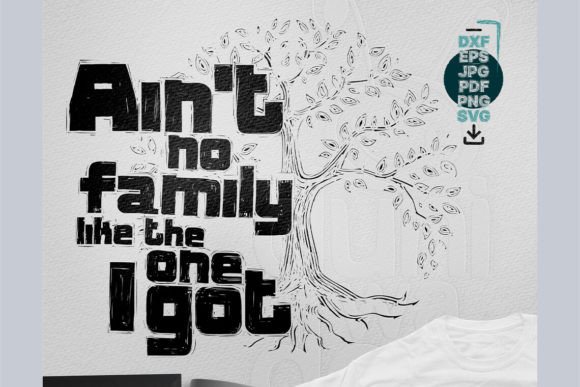
The immediate appeal of this Graphics asset lies in its typographic clarity. The phrase is bold yet approachable, avoiding overly ornate scripts that often cause stitching nightmares. When reviewing the layout, I noticed the balance between letter spacing and overall footprint. For an embroidery project, this is crucial. Tight kerning can lead to thread breaks or messy jump stitches, while too much space can make the design feel disjointed on smaller garments.
The mood created by this design is one of rustic comfort and modern minimalism. It fits seamlessly into the aesthetic of farmhouse decor, casual streetwear, and boutique baby items. As a digital embroidery file, it promises versatility, but the true test is always in the stitching. The visual personality suggests a design that does not need excessive embellishment to stand out. It relies on clean lines and strong contrast, which is ideal for both beginners and advanced embroiderers looking for reliable results.
Real-World Application Scenarios
To truly understand the value of this asset, I imagined several production scenarios. The most natural fit is a custom tote bag design. Canvas provides a stable base that handles the density of text well. Imagine a heavy-duty cotton tote with this quote stitched in a contrasting cream thread on navy blue fabric. The result is a high-value handmade product that appeals to parents, teachers, and anyone proud of their family unit.
Another strong candidate is sweatshirt embroidery. Here, the design must navigate the challenge of fleece or French terry fabric. The quote’s straightforward structure allows it to sit flat without puckering, provided the correct stabilizer is used. For Etsy seller audiences, this type of item sells well during the holiday season as a personalized gift. It is also suitable for baby embroidery on onesies or bibs, though scaling down requires careful attention to detail to ensure legibility remains intact.
I also considered its use on an embroidered patch. Patches are trending in the craft business sector, allowing customers to add personality to jackets and bags. The solid nature of the letters in this design would translate well to a satin stitch border with a fill interior, creating a durable accessory that withstands washing and wear.
Technical Considerations for Stitching
While the design is robust, there are areas where caution is necessary. If you are working with a small hoop size, such as a 4x4 inch frame, you must verify the dimensions of the file before loading it. Cramping the text can distort the message. Additionally, when stitching on stretchy fabrics like jersey knits for custom apparel, the tension must be balanced. A heavy fill stitch can cause the fabric to gather if not properly supported with cut-away stabilizer.
Textured fabrics present another challenge. On a waffle-knit towel or a ribbed sweater, fine details can get lost. This design appears to rely on medium-to-bold stroke widths, which is advantageous for textured surfaces. However, I recommend running a test on scrap fabric first. Check the stitch density to ensure it does not perforate delicate materials like silk or thin rayon. For dark fabrics, consider using an underlay stitch to prevent the background color from showing through the top threads.
The listing mentions it includes SVG, DXF, and EPS files. These are primarily vector formats used for cutting machines or graphic design, not necessarily native embroidery formats like PES or DST. As a professional, I must advise you to check if the listing includes actual machine embroidery files or if you need to digitize these vectors yourself. If they are purely vector graphics, you will need software to convert them into a stitch file, adjusting parameters like satin stitch width and pull compensation manually. This step is vital for maintaining the integrity of the design.
Enhancing Product Value and Brand Consistency
Using a well-chosen quote like Ain t No Family Like the One I Got can significantly boost the perceived value of your small shop product. Customers are not just buying a shirt or a bag; they are buying an expression of identity. When the stitching is clean and the design is relevant, it builds trust. A sloppy or poorly scaled design can undermine brand consistency, making your finished product look amateurish.
For commercial embroidery purposes, consistency is key. If you are producing a line of matching family shirts, ensure that the thread colors match across all sizes. Use a printable mockup to visualize how the design looks on different garment colors before committing to production. This helps in creating compelling listings for your online store, reducing the likelihood of returns due to expectation mismatches.
Practical Designer Notes
- Test on Scrap Fabric: Always run a sample stitch-out on the same material you intend to use for the final product. This reveals issues with tension and density.
- Check Thread Contrast: High contrast improves readability. Test light threads on dark fabrics and vice versa to ensure the quote pops.
- Verify File Formats: Confirm if the download includes native embroidery files or just vector graphics. If it is the latter, prepare for digitizing work.
- Use Proper Stabilizer: Match the stabilizer to the fabric. Cut-away for knits, tear-away for woven cottons, and wash-away for delicate or sheer materials.
- Inspect Small Details: Zoom in on the vector files to check for closed paths and smooth curves. Imperfections in the source file can lead to jagged stitches.
- Consider Licensing: Before selling items made with this design, review the license terms. Ensure it covers commercial use for physical goods if you plan to sell them.
In the realm of Crafts and digital assets, having a reliable design is half the battle. The other half is execution. This design offers a strong foundation for various projects, from holiday embroidery gifts to everyday apparel decorators stock. By paying attention to technical details and understanding the material constraints, you can transform a simple digital file into a cherished keepsake. Whether you are a hobbyist or a seasoned creative entrepreneur, treating each stitch with intention will elevate your work and satisfy your customers.