Reviewing Women s Bodies Are More Regulated Than G
As a designer who has spent countless hours digitizing and stitching out machine embroidery design files for clients, I have learned that the most impactful pieces are often those that balance bold messaging with technical precision. When I first opened the file for Women s Bodies Are More Regulated Than G, my immediate reaction was not just about the political weight of the statement, but about its visual potential. This is not merely a graphic; it is a conversation starter stitched into fabric. For any Etsy seller or craft business owner looking to add meaningful design assets to their portfolio, understanding how this specific embroidery file behaves under the needle is crucial before committing to a full production run.
First Impressions and Visual Mood
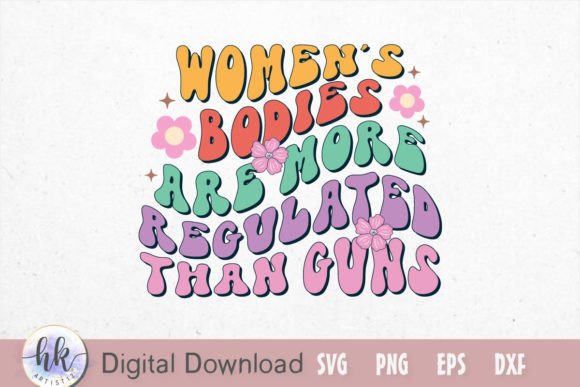
The layout of Women s Bodies Are More Regulated Than G strikes a balance between modern typography and classic advocacy art. The mood is assertive yet clean, avoiding the clutter that often plagues text-heavy designs. From a reviewer’s perspective, the clarity of the lines suggests that this Graphics package was created with vector precision, which translates well when converted into stitch paths. The transparency of the background in the included PNG allows for easy mockup creation, a vital step for any small shop product listing. The design does not rely on excessive shading or complex gradients, which makes it inherently suitable for embroidery where thread count and color changes must be managed carefully.
Real-World Application: The Custom Tote Bag Test
To truly evaluate this design, I envisioned a common real-life scenario: creating a custom tote bag design for a local women’s rights rally. Canvas is a forgiving fabric, but it requires a design that holds its shape without puckering. Given that the package includes SVG and DXF formats alongside the high-resolution PNG, the flexibility is there for various crafting methods. However, for embroidery, the key is scale. At 6x6 inches, this design fits comfortably within standard hoops used for tote bags.
When stitching this onto a heavy cotton canvas, the text needs to remain legible from a distance. I found that using a bold satin stitch for the main lettering provides the necessary pop, while a fill stitch might be too dense for certain fonts if not adjusted properly. The result is a handmade product that feels substantial and professional. Customers reacting to such a piece are not just buying a bag; they are buying a statement. The durability of the thread ensures that the message survives frequent washing, which is essential for a functional item like a tote.
Versatility Across Apparel and Home Decor
Beyond tote bags, this design shines in custom apparel. Imagine it centered on the chest of a heavyweight sweatshirt. The sweatshirt embroidery market is booming, and buyers look for designs that do not feel stiff or uncomfortable against the skin. Here, the density of the stitch work becomes critical. If the design is too dense, it can create a hard patch on soft fleece. A skilled digitizer would likely recommend using a lighter fill or incorporating running stitch outlines to reduce bulk while maintaining visibility.
For home decor, consider a pillow cover or a kitchen towel. On textured fabrics like linen or waffle weave, the contrast between the smooth thread and the rough fabric texture adds depth. However, one must be cautious with thin fabrics. A delicate tea towel might pucker under the weight of a large text design unless a proper cut-away stabilizer is used. This is where the experience of the embroidery project manager comes into play—knowing that the same file behaves differently on terry cloth versus silk.
Technical Considerations and Limitations
While the design is versatile, it is not without its challenges. Small hoop sizes, such as 4x4 inches, would require significant scaling down, which could compromise the legibility of smaller letters. In embroidery, tiny details can get lost or cause thread breaks. Therefore, I advise testing the design on scrap fabric first, especially if you plan to use it on curved surfaces like caps. Cap embroidery requires specialized backing and often benefits from simpler, bolder designs to avoid distortion.
Another critical factor is thread colors. This design relies heavily on contrast. On dark fabric, light threads are mandatory for readability. Conversely, on light fabric, deep, saturated colors work best. I recommend creating black and white mockups to check the silhouette of the design before selecting your final palette. This helps ensure that the visual appeal remains strong regardless of the garment color. Additionally, always check the stitch density settings in your software. High density can lead to thread bunching, while low density might show the fabric underneath, ruining the professional look of the finished product.
Commercial Viability and Brand Consistency
For commercial embroidery professionals, the licensing terms are paramount. The description notes that this is a Women’s Rights SVG Design perfect for crafting projects. Before selling personalized gift items or mass-producing embroidered patch runs, you must confirm the license allows for commercial use of the finished items. Assuming it does, this design offers high value because it taps into current social conversations. It enhances brand consistency for shops that focus on empowerment and activism.
Buyer engagement often hinges on the perceived quality of the digital embroidery file and the resulting physical item. A clean, well-stitched design builds customer trust. It signals that the maker cares about detail. Whether you are creating holiday embroidery gifts or everyday wear, the professionalism of the output reflects directly on your brand. Using high-quality thread colors and ensuring proper tension will elevate this from a simple craft to a boutique-level item.
Final Designer Notes
Before launching this design in your small shop product line, take these practical steps. First, verify the file formats you receive. The package lists EPS, SVG, PNG, and DXF. Note that these are primarily vector and raster graphics formats, not native machine embroidery formats like PES or DST. You will need to use embroidery software to convert these graphics into stitch files, or ensure the provider includes converted files if stated elsewhere. This conversion step is where your expertise matters most. Adjust the hoop size placement, select the appropriate stabilizer for your fabric type, and always do a test run.
Check for any tiny corners in the lettering that might require tie-offs or underlay stitches to prevent unraveling. Compare the design on both light and dark backgrounds to ensure versatility. Finally, remember that while the digital asset is static, the embroidery project is dynamic. The interplay of thread sheen, fabric texture, and lighting will define the final look. By treating Women s Bodies Are More Regulated Than G with the technical respect it deserves, you can create powerful, durable, and visually striking pieces that resonate with your audience.